
In this article
- The Fadiman Diary, 2010 to 2011
- Tim Ferriss, "Tools of Titans," and the Podcast Era, 2015 to 2017
- Bulletproof, the Quantified Self, and the Biohacker Ecosystem
- Ray Kurzweil, the Singularity, and the Tech Faith Connection
- The Cultural Lift, 2017 to 2019
- The Imperial Self-Blinding Reversal, 2021
- Retreats, Decriminalization, Oregon 109, Colorado 122
- Where Microdosing Stands Today, and the Question Worth Asking
By the late 2010s, "microdosing" had become the kind of phrase you heard at wellness retreats, in Y Combinator office conversations, in pitch decks at the back of South by Southwest, and in earnest explainer videos funded by VC-backed media companies. Founders, product managers, and engineers described taking a tenth of a "trip" dose of LSD or psilocybin on a Monday morning, then moving through their sprint planning with what they called a small lift in focus, creativity, and emotional steadiness. The practice carried with it a specific cultural signature: technocratic, self-quantified, hopeful, allergic to anything that smelled like 1960s counterculture. A 2018 New York Times piece, by then the third or fourth in a series of mainstream write-ups of the trend, called the user base "a small herd of software engineers, designers, and executives" who had decided that very small psychedelic doses might make them slightly better at their jobs.
The interesting question is not whether microdosing works. The interesting question is how a practice that was, until recently, the kind of thing described in obscure psychedelic community forums became a Silicon Valley default in roughly a decade, and what that arc tells us about how cultural adoption and clinical evidence interact in real time. This article traces the lineage from a 2010 self-report diary, through the Tim Ferriss podcast era and the biohacker infrastructure, into mainstream coverage and the first placebo-controlled reversal studies, then opens the question the Imperial College team raised in 2021: did the science ever catch up to the adoption, or did the adoption simply outrun it?
The Fadiman Diary, 2010 to 2011
The microdosing tradition that took hold in Silicon Valley begins, in any honest historical accounting, with a quiet document by a Stanford-trained psychologist named James Fadiman. In 2010, Fadiman began collecting first-person reports from a small but persistent group of people who were taking roughly one-tenth of a standard psychedelic dose, usually LSD or psilocybin, two or three times per week, and journaling what they noticed. He did not call it microdosing. The convention that the sub-perceptual dose had a name, and that the name would spread, came later. What Fadiman did was create a structure for people to report their experience with a regular schedule, share those reports with a small cohort, and let the cohort accumulate enough consistent signal to feel like evidence.
Fadiman published what he had collected in a small book called "The Psychedelic Explorer's Guide," released in 2011. The book's microdosing section was not its most prominent element. The book was mostly about preparation, set, setting, and integration work for full-dose experiences. But the microdosing appendix contained something that turned out to matter: a set of questions that anyone could use to track what they noticed about themselves on a microdose schedule. The questions were practical, structured, and friendly to people who did not think of themselves as part of the psychedelic community. They were the kind of thing a founder could answer without first explaining what they were doing to their friends, family, or HR department.
The Fadiman protocol, as it came to be known, had three defining features. First, dose. A standard microdose totaled between 5 and 10 micrograms of LSD, or about 0.1 to 0.3 grams of dried psilocybin mushrooms. Both fell well below the threshold of perceptual effects. A person on a true microdose could function in a workday, attend a meeting, type code, and largely pass for unchanged. Second, schedule. The protocol suggested dosing once every three days, never on consecutive days, on the theory that the substance's afterglow carried forward and a daily dose would erode the effect. Third, intention. The protocol asked users to track specific outcomes (focus, mood, sleep, openness) rather than to wait for a general sense of transformation. The book and its questions acted as a kind of primitive measurement infrastructure for a community of users who themselves ran companies that prized measurement.
It is hard to overstate how much of what later became "Silicon Valley microdosing" was structurally pre-formed by Fadiman's 2010 work. The protocol's dose, schedule, and tracking orientation repeated almost verbatim, for the next fifteen years, in podcast interviews, blog posts, and subreddit guides. Fadiman himself, in talks he gave through the 2010s, would sometimes remark that the protocol worked as well as it did because the people most likely to adopt it were the kind of people who already organized their week around metrics dashboards. The protocol was measurable. The protocol responded to measurement. The protocol produced something stable to talk about.
Tim Ferriss, "Tools of Titans," and the Podcast Era, 2015 to 2017
The Fadiman protocol might have stayed in its small community had a different set of cultural amplifiers not picked it up between 2015 and 2017. The most consequential of these was the writer, podcaster, and self-experimenter Tim Ferriss, whose 2016 book "Tools of Titans" included a section on microdosing that struck a particular chord with the kind of readers Ferriss had spent the previous decade building an audience with: senior knowledge workers, many of them in tech or finance, who treated self-improvement as a serious hobby. The microdosing chapter appeared alongside interviews with Navy SEALs, venture capitalists, and chess grandmasters, and the placement sent a signal. Microdosing was a tool in the same drawer as meditation, sleep tracking, and lifting protocols. It belonged to the same practitioner identity.
Ferriss also hosted what became, for several years, the most-watched long-form podcast in the prestige self-improvement niche, "The Tim Ferriss Show." By 2017, microdosing was a recurring topic. Ferriss did not personally endorse microdosing as a practice for everyone. What he did, more importantly, was give Fadiman and other microdosing researchers repeated exposure to an audience that was already predisposed to evaluate productivity tools on cost, time commitment, and subjective effect. The interview format helped convert the Fadiman protocol from a countercultural artifact into an item a peer could buy into with a 45-minute listen.
Around Ferriss, a small constellation of writers and podcasters picked up the baton and amplified it further. Joe Rogan, whose show was already serving as a parallel pipeline to the same audience and several adjacent ones, hosted Fadiman in 2018 in one of the more widely-shared long-form interviews on the topic. Biohacker podcasters in the Quantified Self movement, including Dave Asprey's Bulletproof Radio and several smaller shows, treated microdosing as on-topic for their existing coverage of supplementation, sleep, cognitive performance, and "hacking your biology." Each of these channels had a different rhetorical style. Together, they caused the topic to migrate from Fadiman's specialized audience into a mainstream wellness audience that did not share the original community's history or vocabulary.
The cultural mechanism here matters. The same Fadiman text had been available for years before Ferriss's chapter, and had not driven anything close to this level of adoption. What changed was not the underlying material, it was the channel through which it reached a new audience. The protocol arrived in that audience already framed as a productivity tool, complete with a measured dose and a tracking worksheet, and the audience was ready for it in a way it would not have been in 2010. James Fadiman himself has described the spread, in interviews, as moving the protocol "from meditation centers to startup offices" without much friction.
Bulletproof, the Quantified Self, and the Biohacker Ecosystem
If Tim Ferriss framed microdosing as a productivity tool, Dave Asprey built it into a commercial infrastructure. Asprey, former tech executive turned author of "The Bulletproof Diet" (2014) and founder of the Bulletproof coffee brand, ran one of the most listened-to biohacking podcasts in the second half of the 2010s. Bulletproof Radio treated microdosing as one item in a longer list of self-optimization practices that included high-fat fasting diets, infrared saunas, nootropics, and intermittent hypoxic training. Crucially, Asprey did not treat microdosing as the centerpiece of his brand. He treated it as one of many tools, and that placement was itself a kind of cultural argument: microdosing was a fit for the same kind of person who was willing to drink butter in their coffee and sleep in a cold room to optimize morning alertness.
The Quantified Self movement, a community of self-trackers that had been meeting in informal local groups since 2007 and gained a wider audience through books and podcasts through the 2010s, was a parallel pipeline. Its core ontology: the self is a system, the system can be measured, the measurement can be improved. Microdosing, with its protocol-driven schedule and Fadiman's tracking worksheet, fit this ontology cleanly. People in the Quantified Self community had, by 2015, spent years logging sleep, mood, exercise, and supplements. Adding microdosing to an existing tracking stack was less of a conceptual leap than starting from scratch.
A commercial layer grew around the practice without any of the producers of psychedelic compounds being central to it. Several companies founded around 2018 to 2020 marketed "microdosing kits" containing pre-measured capsules of psilocybin (almost always from truffles or off-the-shelf dried mushrooms, since psilocybin itself remained federally illegal) and harm-reduction materials. Online retailers sold dissolution kits, capsules, and volumetric dosing equipment. Wellness influencers created subscription services. None of this would have caused real-world harm if the underlying substance had been something safer than an unscheduled or sub-therapeutic psychedelic dose, and the visible market produced a small but consequential body of harm-reduction discussion around dose, frequency, and integration support. The standard self-hacker pattern of cautious reporting built up, slowly, a public knowledge base that had not previously existed.
What the biohacker ecosystem did was normalize microdosing in a specific class of consumer. It made the practice appear continuous with sleep hygiene and nootropic stacks rather than with anything experimental or political. The new user was not someone who identified with Timothy Leary, the Merry Pranksters, or the Burning Man set. They were someone who identified with their morning routine.
Ray Kurzweil, the Singularity, and the Tech Faith Connection
A subtler, harder-to-pin-down cultural layer sits below the biohacker and podcast ecosystem: the broad Silicon Valley faith in technological self-overhaul. Ray Kurzweil, whose Singularitarianism outlined a future in which humans merge with their tools to overcome biological limits, was not a microdosing advocate. But the broader Kurzweilian frame, that the self is improvable, that biology is a platform, that the right interventions at the right time can produce superlinear upgrades in cognitive performance, was the ambient culture of the people who were hearing about microdosing on Ferriss's podcast. Microdosing, in that ambient frame, was simply another intervention. Mind uploading was the destination; nootropics were the cheap seats.
The Singularity narrative is not strictly about psychedelic use. It is about a wider set of practices by which a certain kind of person expects to redesign themselves through technology. Microdosing fit this narrative because it was reproducible, schedulable, and measurable, and because it operated below the threshold where the user's social standing would be at risk if the practice became known. The biohacker class had spent the previous decade building a culture in which cognitive and physiological optimization was respectable. Microdosing, as a small lift on top of an existing stack, fit in that culture the way an additional caffeine source fits in a morning routine. The conscientious user of microdoses was, in many cases, also a careful user of sleep-tracking rings, fasting schedules, and adapted workout programs. The practice was additive.
Enjoying this? Subscribe free.
Every Tuesday: psychedelic science, policy, and culture, decoded for humans.
You'll also get our free Top 10 Psychedelic Books guide.
You're in! Redirecting to your free guide...
This framing matters because it conditions how the user understood the evidence. The Singularity-adjacent user was already comfortable with interventions that had not been validated by traditional clinical endpoints. They were used to optimizing for personal subjective reports, supplemented by self-collected data. They were primed to evaluate microdosing on what they themselves noticed, not on what a randomized study said. This is not a moral failing. It is a definitional feature of the subculture that produces the early adopters. The biohacker class moves faster than the regulatory science, and they know it.
The Cultural Lift, 2017 to 2019
By 2017, the practice had migrated out of the biohacker niche and into mainstream press coverage that treated it as a phenomenon rather than a self-help tool. Rolling Stone, Wired, and the New York Times all ran pieces in 2017 and 2018 explicitly framed around "the microdosing trend in Silicon Valley." Each of these pieces did something that earlier niche coverage had not. They named the user. The Anglo-American visual shorthand was consistent: a young, conventionally-attractive professional, often male, often in a tech or adjacent industry, often photographed with a laptop or a coffee cup, often not pictured with any substances or substance-adjacent gear. The aesthetic case being made was: this is a person like you. The pieces frequently named real users, identified by name and title, who were willing to go on record about their practice.
The Frances Arnold piece in the New York Times Magazine in 2018, "The Microscopic Doses That Made a Big Splash in Workplaces," is a useful benchmark for how much this framing had already arrived. The piece opened with a Stanford graduate student who kept a microdose log, named specific Bay Area employers where use was reported, and quoted both Fadiman and several working professionals about their experience. The piece treated microdosing with the same register it would use to cover meditation retreats or productivity coaches. The Spanish subgenre had begun to look similar: El País in Spain, Le Monde in France, and several German-language publications ran their own pieces on the trend through 2019, often directly citing the American coverage as their entry point.
This cultural lift did three things at once. It validated the practice for people who were considering it but unwilling to recommend it without mainstream media acknowledgment. It created a commercial opportunity for vendors who were watching the press coverage and ready to ride it. And, importantly, it set up a recoil. By 2019, mainstream coverage was accompanied by serious skeptical writing in long-form venues, often citing the absence of randomized data at a time when adoption had advanced well beyond the evidence. The press cycle was already doing the cultural work that would later get done more carefully by the Imperial College self-blinding study.
The Imperial Self-Blinding Reversal, 2021
In June 2021, a team at Imperial College London published the results of the first properly placebo-controlled microdosing study. The study design was unusual. The lead investigator, Balazs Szigeti, had adapted a protocol that required participants to self-administer their microdose inside capsules they had prepared themselves, then report what they experienced. The twist was procedural: half the participants were given placebo capsules that did not contain any psychedelic substance, and the other half received their own microdose-capsules back to them. The study was self-blinded. The participants did not know, on a given day, whether they were consuming their microdose or the placebo.
The results, published in Nature's Translational Psychiatry journal, were striking and culturally consequential. The participants who knowingly took their microdose reported the same large effects on wellbeing that previous survey work had shown. The participants in the self-blinded arm, who did not know what they were taking, reported effects that were statistically indistinguishable from placebo. The authors' interpretation was restrained. They did not claim microdosing did nothing. They noted that the design measured only acute subjective effects from a single dose. They did suggest something important: a substantial portion of the effects people had been reporting, across years of survey data, appeared to be expectation-driven.
The Szigeti paper landed as a corrective. It did not deny that participants experienced something. It pointed out that the something could be produced by the expectation of taking a microdose as easily as by the substance. Across the next several years, more rigorous studies, including a 2022 Ayelet Harel-led team at the Hebrew University of Jerusalem and a 2024 Johns Hopkins-led investigation into psilocybin microdosing in cancer patients, narrowed but did not close the question. A 2025 Harvard-McLean review of the cumulative evidence suggested that microdosing produced small but real effects on certain cognitive and mood endpoints in some studies and showed placebo-level effects in others, with the variation likely driven by differences in study design, blinding rigor, and population. The honest scientific summary in 2026 is that microdosing remains plausible for some outcomes, that the magnitude of those effects is smaller than the early adopters reported, and that the most enthusiastic anecdotal reports should not be treated as clinically validated.
Retreats, Decriminalization, Oregon 109, Colorado 122
The cultural and scientific story of microdosing is interleaved with the broader legal story of psychedelics in the late 2010s and early 2020s, in ways that are sometimes hard to disentangle. Two parallel tracks shaped the supply and demand sides of the practice.
On the supply side, a retreat and ceremony industry grew in jurisdictions where psilocybin or ayahuasca use was either decriminalized or tolerated by custom. Mexico, the Netherlands, Jamaica, Costa Rica, and several other countries hosted retreat operators who explicitly marketed psilocybin microdosing protocols as part of multi-day wellness experiences. The practitioners included well-trained guides working from rigorous harm-reduction frameworks, but the industry also included operators whose protocols were inconsistent and whose screening was light. The retreat experience, even at the well-run end, was not the same kind of intervention as buying a few capsules in the United States and taking them at one's desk on a Monday morning.
On the demand side, a wave of legislative changes reshaped the legal landscape in ways that mattered even for people who were never going to access the new legal pathways personally. Denver's 2019 decriminalization measure was the first post-Prop-2 municipal precedent in the United States. Oakland followed in the same year. Oregon's Measure 109, passed by voters in 2020 and implemented in 2023, created a regulated supervised psilocybin program that does not include retail sales of microdose quantities, but established a new state-level infrastructure for psilocybin service providers that has become a reference point for other legislative efforts. Colorado's Prop 122, passed in 2022, decriminalized personal possession and created a state-regulated "healing centers" framework that goes further than Oregon's. Multiple additional state and municipal measures have followed.
The relationship between these legislative changes and the microdosing trend is asymmetric. The new laws made supervised, full-dose experiences possible in some jurisdictions. They did not, with rare exceptions, make leisurely microdosing legal in a way the practitioner could safely use. The microdose user in Stockton, California, in 2026 was, technically, doing something that was at most decriminalized at the municipal level and almost certainly illegal under state and federal law. The legislative work and the microdosing practice proceeded on parallel tracks, connected at the level of cultural momentum and shared media coverage, but rarely at the level of legal access.
Where Microdosing Stands Today, and the Question Worth Asking
In mid-2026, the cultural and scientific picture of microdosing is harder to summarize than it was even two years ago. The Fadiman protocol still circulates. The podcasts still cover it. The retreats still offer microdosing-adjacent programs. But several things have shifted. The Imperial self-blinding study and its successors moderated the early-adopter narrative. The clinical pivot toward high-dose psilocybin therapy (for treatment-resistant depression, for end-of-life anxiety, for addiction) absorbed most of the institutional research effort. Federal regulatory movement around psychedelics, where it has happened at all, has been around full-dose therapy and ketamine, not microdosing. The wellness and retreat industries, having grown rapidly between 2019 and 2023, have been consolidating. Major serotonergic microdosing startups that attracted venture funding during the boom have wound down or pivoted. The scientific question of whether microdosing produces reliable clinical benefits on the dimensions people have hoped for remains live, but unresolved.
The more interesting cultural question is the one the trend itself raises, about how cultural adoption and scientific evidence interact. The chain ran in a recognizable direction here. A small behavioral psychology tradition (Fadiman) seeded a measurement-friendly protocol. A specific kind of practitioner audience (tech and biohacker) found the protocol congenial. Podcast and media amplifiers validated and broadened the audience. The legislative and retreat infrastructure grew in parallel. The randomized trial evidence came late, and when it arrived, it complicated the picture without overturning it. The adoption happened, and the evidence has been playing catch-up ever since.
Whether this pattern is a story about how adoption precedes evidence (microdosing is a placebo that worked, then had to catch the science up), a story about how adoption precedes evidence (the science will catch up and find modest real effects worth keeping), or a story about how adoption and evidence operate on partly independent tracks (microdosing may always be a hard-to-study, hard-to-blind intervention whose truth value depends on who is asking) is genuinely unsettled. The history so far is consistent with all three readings. The honest 2026 answer is that the next decade of research will resolve the difference, and that the people who started the Fadiman diaries in 2010 will probably still be doing the practice in 2030, regardless.
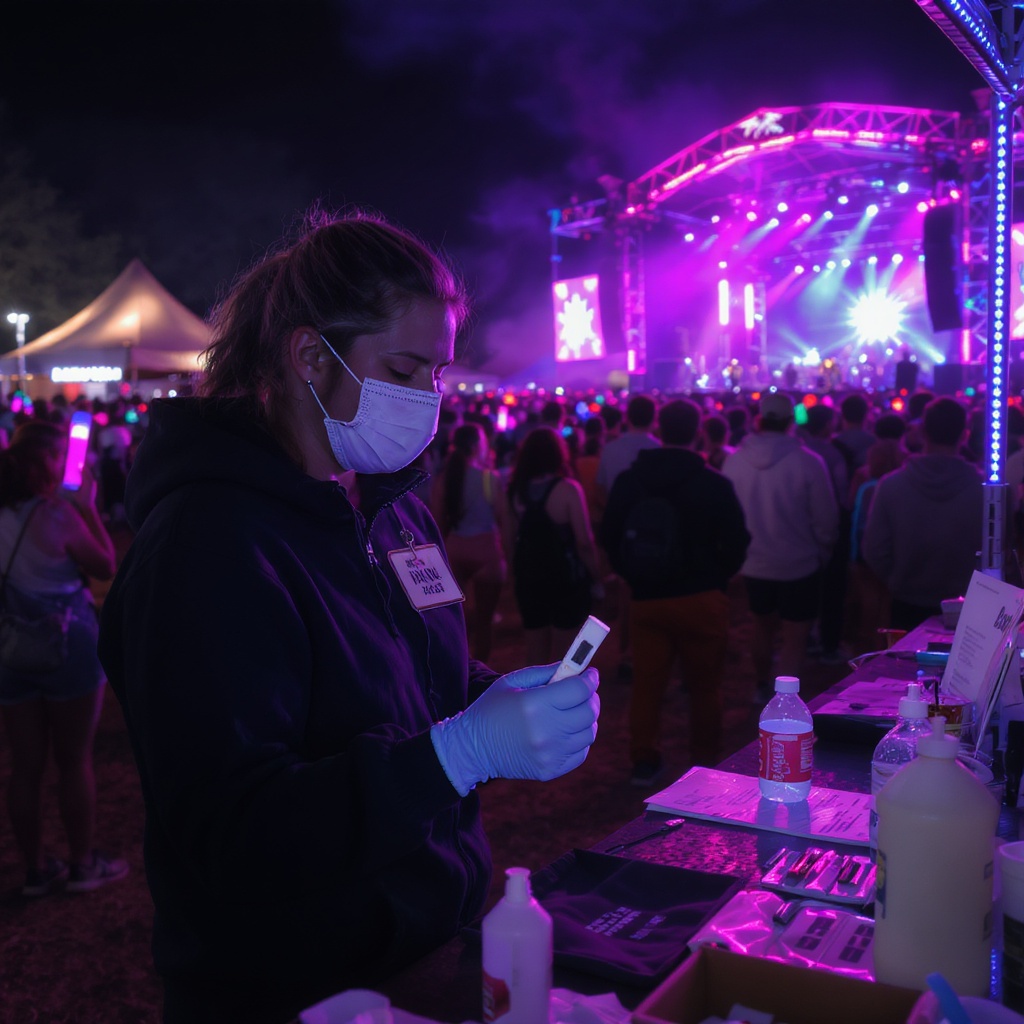
For more on the practice itself, see our microdosing guide. For the deeper substance science on the compounds at the center of most microdose protocols, see our explainers on LSD, psilocybin, and for a fuller picture of the legal patchwork this practice lives inside, our US psychedelic laws map and the broader Compare Psychedelics reference hub. For the adjacent cultural history that produced the kind of person who would adopt this practice, see our piece on Ken Kesey and the Merry Pranksters, and for the contemporary harm-reduction practices the same cultural class has built at festivals, see harm reduction at festivals.
For a look at the ongoing clinical research that runs alongside the microdosing trend, the Carhart-Harris Q&A covers the trial evidence, the default mode network mechanism, and where the regulatory path stands.
This article is historical and cultural. None of the compounds discussed are legal for general use in the United States, and possession outside approved research settings can carry serious penalties.
Related reading


Enjoying this? Subscribe free.
Every Tuesday: psychedelic science, policy, and culture, decoded for humans.
You'll also get our free Top 10 Psychedelic Books guide.
You're in.
Redirecting to your free book guide...